Bioenergy Scenario in Southeast Asia

The rapid economic growth and industrialization in Southeast Asia is characterized by a significant gap between energy supply and demand. The energy demand in the region is expected to grow rapidly in the coming years which will have a profound impact on the global energy market. In addition, the region has many locations with high population density, which makes public health vulnerable to the pollution caused by fossil fuels. Another important rationale for transition from fossil-fuel-based energy systems to renewable ones arises out of observed and projected impacts of climate change. Due to the rising share of greenhouse gas emissions from Asia, it is imperative on all Asian countries to promote sustainable energy to significantly reduce GHGs emissions and foster sustainable energy trends. Rising proportion of greenhouse gas emissions is causing large-scale ecological degradation, particularly in coastal and forest ecosystems, which may further deteriorate environmental sustainability in the region.

The reliance on conventional energy sources can be substantially reduced as the region is one of the leading producers of biomass resources in the world. The energy generating capacity of biomass-based CHP plants is comparatively much higher than other alternative energy technologies like solar, wind and geothermal energy. In addition, solar and wind projects are confined to remote rural electrification and community centres, where the required installed capacity is low. On the other hand, biomass-based cogeneration plants can generate higher capacities of electrical and heat energy that could benefit an entire township and industries in the immediate area.

Southeast Asia, with its abundant biomass resources, holds a strategic position in the global biomass energy atlas. There is immense potential of biopower in Southeast Asian countries due to plentiful supply of diverse forms of wastes such as agricultural residues, woody biomass, animal wastes, municipal solid waste, etc. The Southeast Asian region is a big producer of wood and agricultural products which, when processed in industries, produces large amounts of biomass residues. According to conservative estimates, the amount of biomass residues generated from sugar, rice and palm oil mills is more than 200-230 million tons per year which corresponds to cogeneration potential of 16-19 GW. Woody biomass is a good energy resource due to presence of large number of forests and wood processing industries in the region.

The prospects of biogas power generation are also high in the region due to the presence of well-established food-processing and dairy industries. Another important biomass resource is contributed by municipal solid wastes in heavily populated urban areas.  In addition, there are increasing efforts from the public and private sectors to develop biomass energy systems for efficient biofuel production, e.g. bio-diesel from palm oil. The rapid economic growth and industrialization in the region has accelerated the drive to implement the latest biomass energy technologies in order to tap the unharnessed potential of biomass resources, thereby making a significant contribution to the regional energy mix.

Bioenergy Potential of Empty Fruit Bunches

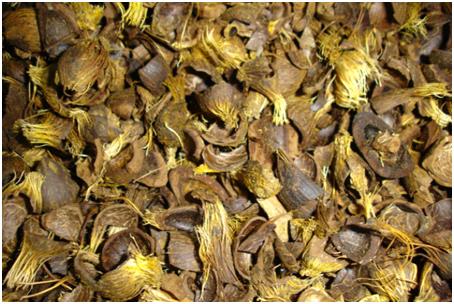
In a typical palm oil mill, empty fruit bunches are available in abundance as fibrous material of purely biological origin. EFB contains neither chemical nor mineral additives, and depending on proper handling operations at the mill, it is free from foreign elements such as gravel, nails, wood residues, waste etc. However, it is saturated with water due to the biological growth combined with the steam sterilization at the mill. Since the moisture content in EFB is around 67%, pre-processing is necessary before EFB can be considered as a good fuel.

Unprocessed EFB is available as very wet whole empty fruit bunches each weighing several kilograms while processed EFB is a fibrous material with fiber length of 10-20 cm and reduced moisture content of 30-50%. Additional processing steps can reduce fiber length to around 5 cm and the material can also be processed into bales, pellets or pulverized form after drying.

There is a large potential of transforming EFB into renewable energy resource that could meet the existing energy demand of palm oil mills or other industries. Pre-treatment steps such as shredding/chipping and dewatering (screw pressing or drying) are necessary in order to improve the fuel property of EFB. Pre-processing of EFB will greatly improve its handling properties and reduce the transportation cost to the end user i.e. power plant. Under such scenario, kernel shells and mesocarp fibres which are currently utilized for providing heat for mills can be relieved for other uses off-site with higher economic returns for palm oil millers.

The fuel could either be prepared by the mills before sell to the power plants, or handled by the end users based on their own requirements.  Besides, centralized EFB collection and pre-processing system could be considered as a component in EFB supply chain. It is evident that the mapping of available EFB resources would be useful for EFB resource supply chain improvement. This is particular important as there are many different competitive usages. With proper mapping, assessment of better logistics and EFB resource planning can lead to better cost effectiveness for both supplier and user of the EFB.

A covered yard is necessary to supply a constant amount of this biomass resource to the energy sector. Storage time should however be short, e.g. 5 days, as the product; even with 45% moisture is vulnerable to natural decay through fungi or bacterial processes. This gives handling and health problems due to fungi spores, but it also contributes through a loss of dry matter trough biological degradation. Transportation of EFB is recommended in open trucks with high sides which can be capable of carrying an acceptable tonnage of this low-density biomass waste.

For EFB utilization in power stations, the supply chain is characterized by size reduction, drying and pressing into bales. This may result in significantly higher processing costs but transport costs are reduced. For use in co-firing in power plants this would be the best solution, as equipment for fuel handling in the power plant could operate with very high reliability having eliminated all problems associated with the handling of a moist, fibrous fuel in bulk.

Bioenergy Perspectives for Southeast Asia

Southeast Asia, with its abundant biomass resources, holds a strategic position in the global biomass energy atlas. There is immense potential of biopower in Southeast Asian countries due to plentiful supply of diverse forms of wastes such as agricultural residues, woody biomass, animal wastes, municipal solid waste, etc. The rapid economic growth and industrialization in the region has accelerated the drive to implement the latest waste-to-energy technologies to tap the unharnessed potential of biomass resources.

The Southeast Asian region is a big producer of wood and agricultural products which, when processed in industries, produces large amounts of biomass residues. According to conservative estimates, the amount of biomass residues generated from sugar, rice and palm oil mills is more than 200-230 million tons per year which corresponds to cogeneration potential of 16-19 GW.

Rice mills in the region produce 38 million tonnes of rice husk as solid residue which is a good fuel for producing heat and power. Sugar industry is an integral part of the industrial scenario in Southeast Asia accounting for 7% of sugar production worldwide. Sugar mills in Thailand, Indonesia, Philippines and Vietnam generate 34 million tonnes of bagasse every year.  Malaysia, Indonesia and Thailand account for 90% of global palm oil production leading to the generation of 27 million tonnes of waste per annum in the form of empty fruit bunches (EFBs), fibers and shells, as well as liquid effluent.

Woody biomass is a good energy resource due to presence of large number of forests in Southeast Asia. Apart from natural forests, non-industrial plantations of different types (e.g. coconut, rubber and oil palm plantations, fruit orchards, and trees in homesteads and gardens) have gained recognition as important sources of biomass. In addition, the presence of a large number of wood processing industries also generates significant quantity of wood wastes. The annual production of wood wastes in the region is estimated to be more than 30 million m3.

The prospects of biogas power generation are also high in the region thanks to presence of well-established food-processing and dairy industries. Another important biomass resource is contributed by municipal solid wastes in heavily populated urban areas.  In addition, there are increasing efforts both commercially and promoted by governments to develop biomass energy systems for efficient biofuel production, e.g. bio-diesel from palm oil.

Biomass resources, particularly residues from forests, wood processing, agricultural crops and agro-processing, are under-utilised in Southeast Asian countries. There is an urgent need to utilize biomass wastes for commercial electricity and heat production to cater to the needs of the industries as well as urban and rural communities.

Southeast Asian countries are yet to make optimum use of the additional power generation potential from biomass waste resources which could help them to partially overcome the long-term problem of energy supply. Technologies for biomass utilization which are at present widely used in Southeast counties need to be improved towards best practice by making use of the latest trends in the waste-to-energy sector.

Properties and Uses of POME

Palm Oil processing gives rise to highly polluting waste-water, known as Palm Oil Mill Effluent (POME), which is often discarded in disposal ponds, resulting in the leaching of contaminants that pollute the groundwater and soil, and in the release of methane gas into the atmosphere. POME is an oily wastewater generated by palm oil processing mills and consists of various suspended components. This liquid waste combined with the wastes from steriliser condensate and cooling water is called palm oil mill effluent (POME).

On average, for each ton of FFB (fresh fruit bunches) processed, a standard palm oil mill generate about 1 tonne of liquid waste with biochemical oxygen demand (BOD) 27 kg, chemical oxygen demand (COD) 62 kg, suspended solids (SS) 35 kg and oil and grease 6 kg. POME has a very high Biochemical Oxygen Demand (BOD) and Chemical Oxygen Demand (COD), which is 100 times more than the municipal sewage.

POME is a non-toxic waste, as no chemical is added during the oil extraction process, but will pose environmental issues due to large oxygen depleting capability in aquatic system due to organic and nutrient contents. The high organic matter is due to the presence of different sugars such as arabinose, xylose, glucose, galactose and manose. The suspended solids in the POME are mainly oil-bearing cellulosic materials from the fruits. Since the POME is non-toxic as no chemical is added in the oil extraction process, it is a good source of nutrients for microorganisms.

Currently, recovery of renewable organic-based product is a new approach in managing POME. The technology is aimed to recover by-products such as volatile fatty acid, biogas and poly-hydroxyalkanoates to promote sustainability of the palm oil industry. In addition, it is envisaged that POME can be sustainably reused as a fermentation substrate in production of various metabolites through biotechnological advances. In addition, POME consists of high organic acids and is suitable to be used as a carbon source.

Anaerobic digestion is widely adopted in the industry as a primary treatment for POME. Biogas is produced in the process in the amount of 20 mper ton FFB. This effluent could be used for biogas production through anaerobic digestion. At many Palm-oil mills this process is already in place to meet water quality standards for industrial effluent. The gas, however, is flared off. Palm Oil mills, being one of the largest industries in Malaysia and Indonesia, effluents from these mills can be anaerobically converted into biogas which in turn can be used to generate power through gas turbines or gas-fired engines. According to World Oil Data (World Oil, 2006), potential POME produced from all Palm Oil Mills in Indonesia was 34 million m3in 2005. This is equivalent to total COD loading of about 1.7 million tons resulting in 350,000 tons of methane.

Palm Kernel Shells as Biomass Resource

Woman removing palm kernels from the husk

Biomass residue from palm oil industries are attractive renewable energy fuel in Southeast Asia. The abundance of these biomass resources is increasing with the fast development of palm oil industries in Malaysia, Indonesia and Thailand. In the Palm Oil value chain there is an overall surplus of by-products and the utilisation rate of these by-products is low. Palm kernel shells are the shell fractions left after the nut has been removed after crushing in the Palm Oil mill. Kernel shells are a fibrous material and can be easily handled in bulk directly from the product line to the end use. Large and small shell fractions are mixed with dust-like fractions and small fibres.

Moisture content in kernel shells is low compared to other Biomass residues with different sources suggesting values between 11% and 13%. Palm kernel shells contain residues of Palm Oil, which accounts for its slightly higher heating value than average lignocelluloses Biomass. Compared to other residues from the industry, it is a good quality Biomass fuel with uniform size distribution, easy handling, easy crushing, and limited biological activity due to low moisture content.

Press fibre and shell generated by the Palm Oil mills are traditionally used as solid fuels for steam boilers. The steam generated is used to run turbines for electricity production. These two solid fuels alone are able to generate more than enough energy to meet the energy demands of a Palm Oil mill. Most Palm-oil mills in the region are self-sufficient in terms of energy by making use of kernel shells and mesocarp fibers in cogeneration.

The problems associated with the burning of these solid fuels are the emissions of dark smoke and the carry-over of partially carbonized fibrous particulates due to incomplete combustion of the fuels can be tackled by commercially-proven technologies in the form of high-pressure boilers. Dual-fired boilers capable of burning either diesel oil or natural gas are the most suitable for burning Palm Oil waste since they could also facilitate the use of POME-derived biogas as a supplementary fuel. However, there is a great scope for introduction of high-efficiency CHP systems in the industry which will result in substantial supply of excess power to the public grid.

Biomass Energy Scenario in Indonesia

With Indonesia’s recovery from the Asian financial crisis of 1998, energy consumption has grown rapidly in past decade. The priority of the Indonesian energy policy is to reduce oil consumption and to use renewable energy. For power generation, it is important to increase electricity power in order to meet national demand and to change fossil fuel consumption by utilization of biomass wastes. The development of renewable energy is one of priority targets in Indonesia.

It is estimated that Indonesia produces 146.7 million tons of biomass per year, equivalent to about 470 GJ/y. The source of biomass energy is scattered all over the country, but the big potential in concentrated scale can be found in the Island of Kalimantan, Sumatera, Irian Jaya and Sulawesi. Studies estimate the electricity generation potential from the roughly 150 Mt of biomass residues produced per year to be about 50 GW or equivalent to roughly 470 GJ/year. These studies assume that the main source of biomass energy in Indonesia will be rice residues with a technical energy potential of 150 GJ/year. Other potential biomass sources are rubber wood residues (120 GJ/year), sugar mill residues (78 GJ/year), palm oil residues (67 GJ/year), and less than 20 GJ/year in total from plywood and veneer residues, logging residues, sawn timber residues, coconut residues, and other agricultural wastes.

Sustainable and renewable natural resources such as biomass can supply potential raw materials for energy conversion. In Indonesia, they comprise variable-sized wood from forests (i.e. natural forests, plantations and community forests that commonly produce small-diameter logs used as firewood by local people), woody residues from logging and wood industries, oil-palm shell waste from crude palm oil factories, coconut shell wastes from coconut plantations, as well as skimmed coconut oil and straw from rice cultivation.

The major crop residues to be considered for power generation in Indonesia are palm oil sugar processing and rice processing residues. Currently, 67 sugar mills are in operation in Indonesia and eight more are under construction or planned. The mills range in size of milling capacity from less than 1,000 tons of cane per day to 12,000 tons of cane per day. Current sugar processing in Indonesia produces 8 millions MT bagasse and 11.5 millions MT canes top and leaves. There are 39 palm oil plantations and mills currently operating in Indonesia, and at least eight new plantations are under construction. Most palm oil mills generate combined heat and power from fibres and shells, making the operations energy self –efficient. However, the use of palm oil residues can still be optimized in more energy efficient systems.

Other potential source of biomass energy can also come from municipal wastes. The quantity of city or municipal wastes in Indonesia is comparable with other big cities of the world. Most of these wastes are originated from household in the form of organic wastes from the kitchen. At present the wastes are either burned at each household or collected by the municipalities and later to be dumped into a designated dumping ground or landfill. Although the government is providing facilities to collect and clean all these wastes, however, due to the increasing number of populations coupled with inadequate number of waste treatment facilities in addition to inadequate amount of allocated budget for waste management, most of big cities in Indonesia had been suffering from the increasing problem of waste disposals.

The current pressure for cost savings and competitiveness in Indonesia’s most important biomass-based industries, along with the continually growing power demands of the country signal opportunities for increased exploitation of biomass wastes for power generation.