Vermicomposting is a type of composting in which certain species of earthworms are used to enhance the process of organic waste conversion and produce a better end-product. It is a mesophilic process utilizing microorganisms and earthworms. Earthworms feeds the organic waste materials and passes it through their digestive system and gives out in a granular form (cocoons) which is known as vermicompost.
Simply speaking, vermicompost is earthworm excrement, called castings, which can improve biological, chemical, and physical properties of the soil. The chemical secretions in the earthworm’s digestive tract help break down soil and organic matter, so the castings contain more nutrients that are immediately available to plants.
Production of Vermicompost
A wide range of agricultural residues, such as straw, husk, leaves, stalks, weeds etc can be converted into vermicompost. Other potential feedstock for vermicompost production are livestock wastes, poultry litter, dairy wastes, food processing wastes, organic fraction of MSW, bagasse, digestate from biogas plants etc.
Earthworms consume organic wastes and reduce the volume by 40–60 percent. Each earthworm weighs about 0.5 to 0.6 gram, eats waste equivalent to its body weight and produces cast equivalent to about 50 percent of the waste it consumes in a day. The moisture content of castings ranges between 32 and 66 percent and the pH is around 7. The level of nutrients in compost depends upon the source of the raw material and the species of earthworm.
Types of Earthworms
There are nearly 3600 types of earthworms which are divided into burrowing and non-burrowing types. Red earthworm species, like Eiseniafoetida,and are most efficient in compost making. The non-burrowing earthworms eat 10 percent soil and 90 percent organic waste materials; these convert the organic waste into vermicompost faster than the burrowing earthworms.
They can tolerate temperatures ranging from 0 to 40°C but the regeneration capacity is more at 25 to 30°C and 40–45 percent moisture level in the pile. The burrowing types of earthworms come onto the soil surface only at night. These make holes in the soil up to a depth of 3.5 m and produce 5.6 kg casts by ingesting 90 percent soil and 10 percent organic waste.
Types of Vermicomposting
The types of vermicomposting depend upon the amount of production and composting structures. Small-scale vermicomposting is done to meet personal requirements and farmers/gardeners can harvest 5-10 tons of vermicompost annually.
On the other hand, large-scale vermicomposting is done at commercial scale by recycling large quantities of organic waste in modern facilities with the production of more than hundreds of tons annually.
Benefits of Vermicompost
The worm castings contain higher percentage of both macro and micronutrients than the garden compost. Apart from other nutrients, a fine worm cast is rich in NPK which are in readily available form and are released within a month of application. Vermicompost enhances plant growth, suppresses disease in plants, increases porosity and microbial activity in soil, and improves water retention and aeration.
Vermicompost also benefits the environment by reducing the need for chemical fertilizers and decreasing the amount of waste going to landfills. Vermicompost production is trending up worldwide and it is finding increasing use especially in Western countries, Asia-Pacific and Southeast Asia.
Vermicompost Tea
A relatively new product from vermicomposting is vermicompost tea which is a liquid fertilizer produced by extracting organic matter, microorganisms, and nutrients from vermicompost. Unlike vermicompost and compost, this tea may be applied directly to plant foliage, reportedly to enhance disease suppression. Vermicompost tea also may be applied to the soil as a supplement between compost applications to increase biological activity.
Potential Market
Vermicompost may be sold in bulk or bagged with a variety of compost and soil blends. Markets include home improvement centers, nurseries, landscape contractors, greenhouses, garden supply stores, grocery chains, flower shops, discount houses, indoor gardens, and the general public.
India has a tremendous biomass potential which could easily be relied upon to fulfil most of our energy needs. An estimated 50 MMT (million metric tonnes) of liquid fuels are consumed annually in India, but with the actual biomass potential and its full utilization, India is capable of generating almost double that amount per annum. These biomass estimates only constitute the crop residues available in the country and essentially the second-generation fuels since the use of first-generation crop bases fuels in such food-starved nations is a criminal thought.
Existing Technologies
Currently, there are various technologies available to process such crop residues and generate value products from them. However, essentially, they all revolve around two main kinds of processes, either biochemical or thermal.
The biochemical process involves application of aerobic/anaerobic digestion for the production of biogas; or fermentation, which results in the generation of ethanol. Both these products could be subsequently treated chemically and through trans-esterification process, leading to production of biodiesel.
Alternatively, the thermochemical processes involve either the combustion, gasification or pyrolysis techniques, which produces heat, energy-rich gas and liquid fuels respectively. These products can be used as such, or could be further processed to generate high quality biofuels or chemicals.
The Need
The estimated organized energy breakup for India is 40 percent each for domestic and transport sectors and 20 percent for the industrial sectors. The current share of crude oil and gases is nearly 90 percent for the primary and transport sectors and the remaining 10 percent for the generation of industrial chemicals.
The fluctuating prices of crude oil in the international market and the resulting concern over energy security, has lead developing nations to explore alternative and cheap sources of energy to meet the growing energy demand. One of the promising solution for agrarian economies is Biorefinery.
The Concept
Biorefinery is analogous to the traditional petroleum refineries employing fractional distillation process for obtaining different fractions or components from the same raw material, i.e. the crude oil. Biorefinery involve the integration of different biomass treatment and processing methods into one system, which results in the production of different components from the same biomass. This makes the entire chain more viable economically and also reduces the waste generated.
Typical Model of a Biorefinery
The outcome ranges from high-volume, low-energy content liquid fuels, which could serve the transportation industry needs, to the low-volume but high-value chemicals, which could add to the feasibility of such a project.
Steam and heat generated in the process could be utilized for meeting process heat requirements. By-products like chemicals, fertilizers, pharmaceuticals, polymers etc are also obtained which provide additional revenue streams.
Benefits
Biorefineries can help in utilizing the optimum energy potential of organic wastes and may also resolve the problems of waste management and GHGs emissions. Wastes can be converted, through appropriate enzymatic/chemical treatment, into either gaseous or liquid fuels.
The pre-treatment processes involved in biorefining generate products like paper-pulp, HFCS, solvents, acetate, resins, laminates, adhesives, flavour chemicals, activated carbon, fuel enhancers, undigested sugars etc. which generally remain untapped in the traditional processes. The suitability of this process is further enhanced from the fact that it can utilize a variety of biomass resources, whether plant-derived or animal-derived.
Applicability
The concept of biorefinery is still in early stages at most places in the world. Problems like raw material availability, feasibility in product supply chain, scalability of the model are hampering its development at commercial-scales. The National Renewable Energy Laboratory (NREL) of USA is leading the front in biorefinery research with path-breaking discoveries and inventions.
Although the technology is still in nascent stages, but it holds the key to the optimum utilization of wastes and natural resources that humans have always tried to achieve. The onus now lies on governments and corporate to incentivize or finance the research and development in this field.
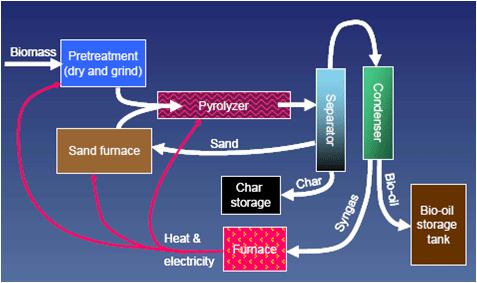
Biomass pyrolysis is the thermal decomposition of biomass occurring in the absence of oxygen. It is the fundamental chemical reaction that is the precursor of both the combustion and gasification processes and occurs naturally in the first two seconds. The products of biomass pyrolysis include biochar, bio-oil and gases including methane, hydrogen, carbon monoxide, and carbon dioxide.
The biomass pyrolysis process consists of both simultaneous and successive reactions when organic material is heated in a non-reactive atmosphere. Thermal decomposition of organic components in biomass starts at 350 °C–550 °C and goes up to 700 °C–800 °C in the absence of air/oxygen. The long chains of carbon, hydrogen and oxygen compounds in biomass break down into smaller molecules in the form of gases, condensable vapours (tars and oils) and solid charcoal under pyrolysis conditions. Rate and extent of decomposition of each of these components depends on the process parameters of the reactor temperature, biomass heating rate, pressure, reactor configuration, feedstock etc
Depending on the thermal environment and the final temperature, pyrolysis will yield mainly biochar at low temperatures, less than 450 0C, when the heating rate is quite slow, and mainly gases at high temperatures, greater than 800 0C, with rapid heating rates. At an intermediate temperature and under relatively high heating rates, the main product is bio-oil.
Slow and Fast Pyrolysis
Pyrolysis processes can be categorized as slow or fast. Slow pyrolysis takes several hours to complete and results in biochar as the main product. On the other hand, fast pyrolysis yields 60% bio-oil and takes seconds for complete pyrolysis. In addition, it gives 20% biochar and 20% syngas. Fast pyrolysis is currently the most widely used pyrolysis system.
The essential features of a fast pyrolysis process are:
Very high heating and heat transfer rates, which require a finely ground feed.
Carefully controlled reaction temperature of around 500oC in the vapour phase
Residence time of pyrolysis vapours in the reactor less than 1 sec
Quenching (rapid cooling) of the pyrolysis vapours to give the bio-oil product.
Advantages of Biomass Pyrolysis
Pyrolysis can be performed at relatively small scale and at remote locations which enhance energy density of the biomass resource and reduce transport and handling costs. Heat transfer is a critical area in pyrolysis as the pyrolysis process is endothermic and sufficient heat transfer surface has to be provided to meet process heat needs. Biomass pyrolysis offers a flexible and attractive way of converting organic matter into energy products which can be successfully used for the production of heat, power and chemicals.
A wide range of biomass feedstock can be used in pyrolysis processes. The pyrolysis process is very dependent on the moisture content of the feedstock, which should be around 10%. At higher moisture contents, high levels of water are produced and at lower levels there is a risk that the process only produces dust instead of oil. High-moisture waste streams, such as sludge and meat processing wastes, require drying before subjecting to pyrolysis.
Furthermore, the bio-char produced can be used on the farm as an excellent soil amender as it is highly absorbent and therefore increases the soil’s ability to retain water, nutrients and agricultural chemicals, preventing water contamination and soil erosion. Soil application of bio-char may enhance both soil quality and be an effective means of sequestering large amounts of carbon, thereby helping to mitigate global climate change through carbon sequestration. Use of bio-char as a soil amendment will offset many of the problems associated with removing crop residues from the land.
Biomass pyrolysis has been garnering much attention due to its high efficiency and good environmental performance characteristics. It also provides an opportunity for the processing of agricultural residues, wood wastes and municipal solid waste into clean energy. In addition, biochar sequestration could make a big difference in the fossil fuel emissions worldwide and act as a major player in the global carbon market with its robust, clean and simple production technology.
There is a pressing need more than ever for sustainable, renewable energy sources. In comes the concept of bioenergy – harnessing power from organic matter with multiple benefits including waste reduction. Below, you can explore this further.
Defining Bioenergy
You’re already familiar with sources like solar, wind or hydroelectric power – these are common renewable energy forms that harness natural elements to generate power. There’s one form that has been under attention lately due to its double benefit – it’s called bioenergy.
Bioenergy refers to generating power from biological and organic materials known as biomass or biofuels. These range from plant sources like wood and crops to waste-derived ones like animal manure and sewage.
Types of Bioenergy
The types of bioenergy depend on the source material (biomass) as well as the conversion process used. Take for instance wood- it can be directly burned for heat or processed into pellets that can be combusted more efficiently. Additionally, plants, agricultural residues and their by-products can be converted using various techniques into liquid fuels such as ethanol.
Another source of biomass is organic waste itself which contains a large amount of potential energy when correctly managed.
Importance of Bioenergy
Bioenergy holds an important place in human efforts towards sustainable living because, unlike fossil fuels, it is renewable. Biomass regrows over time so supplying it continuously is possible without depleting the earth’s resources permanently.
Furthermore, if humans maintain a balance in growth and use of biomass, people won’t add extra carbon dioxide to the atmosphere – another huge advantage considering greenhouse gas emissions from fossil fuels. This makes bioenergy a potentially carbon-neutral or even carbon-negative energy source.
Role of Fast Rubbish Removal
Companies like Same Day Rubbish Removal Ltd play an instrumental role in facilitating waste minimization. This entity specializes in efficient garbage disposal, ensuring the least amount of waste ends up in landfills, which is not only eco-friendly but also a great strategy in resource management.
By sorting out organic wastes suitable for bioenergy production, they make it easier for power plants to convert it into bioenergy without the initial step of waste collection and segregation.
Bioenergy from Household Waste
Your household waste might not seem like much, but collectively it amounts to huge volumes with potential for energy production. Organic kitchen scraps such as vegetable peels, fruit rinds, eggshells and coffee grounds are all high-energy potential biomasses for bioenergy production.
When composted properly, these items provide nutrient-rich biomass that can generate valuable energy.
Processing Organic Waste
The processing of organic or green waste to produce bioenergy involves several steps – depending on the method and desired end-product. Some methods could deal with using heat or thermochemical conversion while other methods may depend on biochemical processes involving organisms or enzymes.
The advantage of these methods lies in the ability to harness the chemical energy stored in the complex organic molecules of wastes, converting them into simpler forms that you can then use as fuel. This essentially turns waste into wealth – a win-win for everyone and for the planet.
Conversion Techniques for Bioenergy
The technique for converting organic waste to bioenergy depends on the material and desired end product and includes thermochemical and biochemical methods. Thermochemical techniques use heat – pyrolysis, gasification and combustion. Biochemical techniques use microbes or enzymes – fermentation, anaerobic digestion and composting.
Dry, woody waste suits thermochemical conversion to yield fuel oils, syngas or heat. Wet waste containing high moisture works better biochemically to produce ethanol, biogas or compost.
Tailoring the conversion process to the waste stream optimizes bioenergy output. This versatility makes organic materials a renewable power source supporting a sustainable future.
Thermochemical Conversion Process
This type of conversion uses heat in the absence or presence of oxygen to break down organic material. The results depend on the process: Combustion completely converts biomass into heat and ash; pyrolysis, which uses no oxygen, produces liquid bio-oil, biogas and bio-char; while gasification breaks down biomass into synthetic gas or ‘syngas’.
These products can then be used directly for energy or further processed into other forms of energy like electricity or transportable fuels.
Biochemical Conversion Process
Unlike thermochemical processes, biochemical conversions use microbes or enzymes rather than heat. Fermentation employs yeast or bacteria in oxygen-free environments to produce biofuels like ethanol.
Anaerobic digestion also utilizes microorganisms on wet organic material, generating biogas for energy and nutrient-rich fertilizer.
Leveraging natural biological agents, these chemical-free methods unlock energy from biomass sustainably. The renewable end-products power homes, vehicles and industry while nourishing soils, showcasing bioenergy’s versatile potential.
Benefits of Bioenergy Production
Bioenergy generation presents multiple benefits both to you and the environment. As we’ve been highlighting, it’s an exceptional tool in waste reduction but also plays a role in climate change mitigation by providing a cleaner, renewable alternative to burning fossil fuels.
Plus, bioenergy production sparks the local economy by providing jobs, it improves energy security by decreasing dependence on international fossil fuel supplies and supports the agricultural sector via demand for biomass crops.
Limitations and Challenges
While the benefits of bioenergy are plentiful, the sector is still fraught with challenges and limitations. The cost of setting up bioenergy facilities, as well as the complexities of logistics and supply chains for biomass material, slow down adoption rates.
In addition to this, bioenergy also competes for land use with food production leading to ethical considerations about food security.
Solutions to Conversion Challenges
The issues faced in adopting bioenergy are not insurmountable. There are myriad pathways being explored to solve these roadblocks. For instance, using waste biomass such as agricultural or forestry residues instead of dedicated energy crops could alleviate pressure on land use.
Technological innovations are making conversion processes more cost-effective and efficient. Policymakers also have an important role to play in creating conducive environments for investments in bioenergy technology and infrastructure.
Scientific Innovations in Bioenergy
Advancements in biotechnology and genetic engineering hold significant potential for improving bioenergy processes. Scientists are developing genetically modified microorganisms that increase efficiency and output of bioenergy conversion. They are also exploring ways of improving biomass crop yields while minimizing their environmental footprints.
On the utility side, innovations are happening in technology for capturing and converting energy from waste biomass – such as advanced boilers and turbines, and more efficient biofuel vehicles.
Policies Promoting Bioenergy
The development and implementation of favorable policies play a critical role in promoting bioenergy adoption. Certain countries have included bioenergy objectives in their National Renewable Energy Action Plans or similar documents to support the sector’s growth.
Such policies often include targets for renewable energy shares, feed-in tariffs for renewable energy production or fiscal incentives for investments in renewable energy technology. These signals from the government encourage investment and boost the sector’s expansion.
Future Prospects of Bioenergy
Bioenergy’s future shines brightly as global renewable energy commitment strengthens. Rising climate change awareness drives further adoption of sustainable power sources like bioenergy.
The European Union’s aim to source 20% of total energy from renewables by 2020 relied heavily on bioenergy contributions. Ongoing research also continues enhancing bioenergy’s efficiency and sustainability.
With these supportive conditions, bioenergy systems look poised to maximize their clean energy output for years to come. Their renewable nature provides a critical solution for meeting present and future energy needs in an eco-friendly manner.
Eco-Friendly Transition
Bioenergy presents an enticing solution in the pursuit of sustainable living. It introduces an effective way to minimize waste while producing clean, renewable energy at the same time. Despite certain logistical and technological challenges currently faced by the industry, the joint forces of scientific innovation and supportive policy creation are set to propel this vital resource into mainstream use for future generations.
The composting process is a complex interaction between organic waste and microorganisms. The microorganisms that carry out this process fall into three groups: bacteria, fungi, and actinomycetes. Actinomycetes are a form of fungi-like bacteria that break down organic matter. The first stage of the biological activity is the consumption of easily available sugars by bacteria, which causes a fast rise in temperature. The second stage involves bacteria and actinomycetes that cause cellulose breakdown. The last stage is concerned with the breakdown of the tougher lignin by fungi.
Central solutions are exemplified by low-cost composting without forced aeration, and technologically more advanced systems with forced aeration and temperature feedback. Central composting plants are capable of handling more than 100,000 tons of biodegradable waste per year, but typically the plant size is about 10,000 to 30,000 tons per year. Biodegradable wastes must be separated prior to composting: Only pure food waste, garden waste, wood chips, and to some extent paper are suitable for producing good-quality compost.
Composting Equipment
The composting plants consist of some or all of the following technical units: bag openers, magnetic and/or ballistic separators, screeners (sieves), shredders, mixing and homogenization equipment, turning equipment, irrigation systems, aeration systems, draining systems, bio-filters, scrubbers, control systems, and steering systems. The composting process occurs when biodegradable waste is piled together with a structure allowing for oxygen diffusion and with a dry matter content suiting microbial growth.
Biodegradable wastes must be separated prior to composting: Only pure food waste, garden waste, wood chips, and to some extent paper are suitable for producing good-quality compost. The temperature of the biomass increases due to the microbial activity and the insulation properties of the piled material. The temperature often reaches 65 to 75 degrees C within few days and then declines slowly. This high temperature hastens the elimination of pathogens and weed seeds.
Composting Methodologies
The methodology of composting can be categorized into three major segments—anaerobic composting, aerobic composting, and vermicomposting. In anaerobic composting, the organic matter is decomposed in the absence of air. Organic matter may be collected in pits and covered with a thick layer of soil and left undisturbed six to eight months. The compost so formed may not be completely converted and may include aggregated masses.
Aerobic composting is the process by which organic wastes are converted into compost or manure in presence of air and can be of different types. The most common is the Heap Method, where organic matter needs to be divided into three different types and to be placed in a heap one over the other, covered by a thin layer of soil or dry leaves. This heap needs to be mixed every week, and it takes about three weeks for conversion to take place. The process is same in the Pit Method, but carried out specially constructed pits. Mixing has to be done every 15 days, and there is no fixed time in which the compost may be ready.
Berkley Method uses a labor-intensive technique and has precise requirements of the material to be composted. Easily biodegradable materials, such as grass, vegetable matter, etc., are mixed with animal matter in the ratio of 2:1. Compost is usually ready in 15 days.
Vermicomposting involves use of earthworms as natural and versatile bioreactors for the process of conversion. It is carried out in specially designed pits where earthworm culture also needs to be done. Vermicomposting is a precision-based option and requires overseeing of work by an expert. It is also a more expensive option (O&M costs especially are high).
Most, if not all of Europe has a suitable climate for biogas production. The specific type of system depends on the regional climate. Regions with harsher winters may rely more on animal waste and other readily available materials compared to warmer climates, which may have access to more crop waste or organic material.
Regardless of suitability, European opinions vary on the most ethical and appropriate materials to use for biogas production. Multiple proponents argue biogas production should be limited to waste materials derived from crops and animals, while others claim crops should be grown with the intention of being used for biogas production.
Biogas Production From Crops
Europeans in favor of biogas production from energy crops argue the crops improve the quality of the soil. Additionally, they point to the fact that biogas is a renewable energy resource compared to fossil fuels. Crops can be rotated in fields and grown year after year as a sustainable source of fuel.
Extra crops can also improve air quality. Plants respire carbon dioxide and can help reduce harmful greenhouse gasses in the air which contribute to global climate change.
Energy crops can also improve water quality because of plant absorption. Crops grown in otherwise open fields reduce the volume of water runoff which makes it to lakes, streams and rivers. The flow of water and harmful pollutants is impeded by the plants and eventually absorbed into the soil, where it is purified.
Urban residents can also contribute to biogas production by growing rooftop or vertical gardens in their homes. Waste from tomatoes, beans and other vegetables is an excellent source of biogas material. Residents will benefit from improved air quality and improved water quality as well by reducing runoff.
Proponents of biogas production from crops aren’t against using organic waste material for biogas production in addition to crop material. They believe crops offer another means of using more sustainable energy resources.
Biogas Production From Agricultural Waste
Opponents to growing crops for biogas argue the crops used for biogas production degrade soil quality, making it less efficient for growing crops for human consumption. They also argue the overall emissions from biogas production from crops will be higher compared to fossil fuels.
Growing crops can be a labor-intensive process. Land must be cleared, fertilized and then seeded. While crops are growing, pesticides and additional fertilizers may be used to promote crop growth and decrease losses from pests. Excess chemicals can run off of fields and degrade the water quality of streams, lakes and rivers and kill off marine life.
Once crops reach maturity, they must be harvested and processed to be used for biogas material. Biogas is less efficient compared to fossil fuels, which means it requires more material to yield the same amount of energy. Opponents argue that when the entire supply chain is evaluated, biogas from crops creates higher rates of emissions and is more harmful to the environment.
Agricultural residues, such as rice straw, are an important carbon source for anaerobic digestion
In Europe, the supply chain for biogas from agricultural waste is more efficient compared to crop materials. Regardless of whether or not the organic waste is reused, it must be disposed of appropriately to prevent any detrimental environmental impacts. When crop residues are used for biogas production, it creates an economical means of generating useful electricity from material which would otherwise be disposed of.
Rural farms which are further away from the electric grid can create their own sources of energy through biogas production from agriculture wastes as well. The cost of the energy will be less expensive and more eco-friendly as it doesn’t have the associated transportation costs.
Although perspectives differ on the type of materials which should be used for biogas production, both sides agree biogas offers an environmentally friendly and sustainable alternative to using fossil fuels.
Composting can be categorized into different categories depending on the nature of decomposition process. The three major segments of composting are anaerobic composting, aerobic composting, and vermicomposting. In anaerobic composting, the organic matter is decomposed in the absence of air. Organic matter may be collected in pits and covered with a thick layer of soil and left undisturbed six to eight months. Anaerobic microorganisms dominate and develop intermediate compounds including methane, organic acids, hydrogen sulphide and other substances. The process is low-temperature, slow and the compost formed may not be completely converted and may include aggregated masses and phytotoxic compounds.
Aerobic Composting
Aerobic compostingis the process by which organic wastes are converted into compost or manure in presence of air. In this process, aerobic microorganisms break down organic matter and produce carbon dioxide, ammonia, water, heat and humus, the relatively stable organic end-product. Although aerobic composting may produce intermediate compounds such as organic acids, aerobic microorganisms decompose them further. The resultant compost, with its relatively unstable form of organic matter, has little risk of phytotoxicity. The heat generated accelerates the breakdown of proteins, fats and complex carbohydrates such as cellulose and hemicellulose. Hence, the processing time is shorter. Moreover, this process destroys many micro-organisms that are human or plant pathogens, as well as weed seeds, provided it undergoes sufficiently high temperature. Although more nutrients are lost from the materials by aerobic composting, it is considered more efficient and useful than anaerobic composting for agricultural production.
There are a variety of methods for aerobic composting, the most common being the Heap Method, where organic matter needs to be divided into three different types and to be placed in a heap one over the other, covered by a thin layer of soil or dry leaves. This heap needs to be mixed every week, and it takes about three weeks for conversion to take place. The process is same in the Pit Method, but carried out in specially constructed pits. Mixing has to be done every 15 days, and there is no fixed time in which the compost may be ready. Berkley Method uses a labor-intensive technique and has precise requirements of the material to be composted. Easily biodegradable materials, such as grass, vegetable matter, etc., are mixed with animal matter in the ratio of 2:1. Compost is usually ready in 15 days.
Vermicomposting
Vermicomposting is a type of composting in which certain species of earthworms are used to enhance the process of organic waste conversion and produce a better end-product. It is a mesophilic process utilizing microorganisms and earthworms. Earthworms feeds the organic waste materials and passes it through their digestive system and gives out in a granular form (cocoons) which is known as vermicompost. Earthworms consume organic wastes and reduce the volume by 40–60 percent. Each earthworm weighs about 0.5 to 0.6 gram, eats waste equivalent to its body weight and produces cast equivalent to about 50 percent of the waste it consumes in a day. The moisture content of castings ranges between 32 and 66 percent and the pH is around 7.
The level of nutrients in compost depends upon the source of the raw material and the species of earthworm. Apart from other nutrients, a fine worm cast is rich in NPK which are in readily available form and are released within a month of application. Vermicompost enhances plant growth, suppresses disease in plants, increases porosity and microbial activity in soil, and improves water retention and aeration.
Biogas, sometimes called renewable natural gas, could be part of the solution for providing people in rural areas with reliable, clean and cheap energy. In fact, it could provide various benefits beyond clean fuel as well, including improved sanitation, health and environmental sustainability.
What is Biogas?
Biogas is the high calorific value gas produced by anaerobic decomposition of organic wastes. Biogas can come from a variety of sources including organic fraction of MSW, animal wastes, poultry litter, crop residues, food waste, sewage and organic industrial effluents. Biogas can be used to produce electricity, for heating, for lighting and to power vehicles.
Using manure for energy might seem unappealing, but you don’t burn the organic matter directly. Instead, you burn the methane gas it produces, which is odorless and clean burning.
Biogas Prospects in Rural Areas
Biogas finds wide application in all parts of the world, but it could be especially useful to developing countries, especially in rural areas. People that live in these places likely already use a form of biomass energy — burning wood. Using wood fires for heat, light and cooking releases large amounts of greenhouse gases into the atmosphere.
The smoke they release also has harmful health impacts, particularly when used indoors. You also need a lot to burn a lot of wood when it’s your primary energy source. Collecting this wood is a time-consuming and sometimes difficult as well as dangerous task.
Many of these same communities that rely on wood fires, however, also have an abundant supply of another fuel source. They just need the tools to capture and use it. Many of these have a lot of dung from livestock and lack sanitation equipment. This lack of sanitation creates health hazards.
Turning that waste into biogas could solve both the energy problem and the sanitation problem. Creating a biogas system for a rural home is much simpler than building other types of systems. It requires an airtight pit lined and covered with concrete and a way to feed waste from animals and latrines into the pit. Because the pit is sealed, the waste will decompose quickly, releasing methane.
This methane flows through a PCV pipe to the home where you can turn it on and light on when you need to use it. This system also produces manure that is free of pathogens, which farmers can use as fertilizer.
A similar but larger setup using rural small town business idea can provide similar benefits for urban areas in developing countries and elsewhere.
Benefits of Biogas for Rural Areas
Anaerobic digestion systems are beneficial to developing countries because they are low-cost compared to other technologies, low-tech, low-maintenance and safe. They provide reliable fuel as well as improved public health and sanitation. Also, they save people the labor of collecting large amounts of firewood, freeing them up to do other activities. Thus, biomass-based energy systems can help in rural development.
Biogas for rural areas also has environmental benefits. It reduces the need to burn wood fires, which helps to slow deforestation and eliminates the emissions those fires would have produced. On average, a single home biogas system can replace approximately 4.5 tons of firewood annually and eliminate the associated four tons of annual greenhouse gas emissions, according to the World Wildlife Fund.
Biogas is also a clean, renewable energy source and reduces the need for fossil fuels. Chemically, biogas is the same as natural gas. Biogas, however, is a renewable fuel source, while natural gas is a fossil fuel. The methane in organic wastes would release into the atmosphere through natural processes if left alone, while the greenhouse gases in natural gas would stay trapped underground. Using biogas as a fuel source reduces the amount of methane released by matter decomposing out in the open.
What Can We Do?
Although biogas systems cost less than some other technologies, affording them is often still a challenge for low-income families in developing countries, especially in villages. Many of these families need financial and technical assistance to build them. Both governments and non-governmental organizations can step in to help in this area.
Once people do have biogas systems in place though, with minimal maintenance of the system, they can live healthier, more comfortable lives, while also reducing their impacts on the environment.
The waste management hierarchy suggests that reduce, reuse and recycling should always be given preference in a typical waste management system. However, these options cannot be applied uniformly for all kinds of wastes. For examples, food waste is quite difficult to deal with using the conventional 3R strategy.
Of the different types of organic wastes available, food waste holds the highest potential in terms of economic exploitation as it contains high amount of carbon and can be efficiently converted into biogas and organic fertilizer.
There are numerous places which are the sources of large amounts of food waste and hence a proper food waste management strategy needs to be devised for them to make sure that either they are disposed off in a safe manner or utilized efficiently. These places include hotels, restaurants, malls, residential societies, college/school/office canteens, religious mass cooking places, communal kitchens, airline caterers, food and meat processing industries and vegetable markets which generate food residuals of considerable quantum on a daily basis.
The anaerobic digestion technology is highly apt in dealing with the chronic problem of food waste management in urban societies. Although the technology is commercially viable in the longer run, the high initial capital cost is a major hurdle towards its proliferation.
The onus is on the governments to create awareness and promote such technologies in a sustainable manner. At the same time, entrepreneurs, non-governmental organizations and environmental agencies should also take inspiration from successful food waste-to-energy projects in Western countries and try to set up such facilities in cities and towns.
We use cookies on our website to give you the most relevant experience by remembering your preferences and repeat visits. By clicking “Accept”, you consent to the use of ALL the cookies.
This website uses cookies to improve your experience while you navigate through the website. Out of these cookies, the cookies that are categorized as necessary are stored on your browser as they are as essential for the working of basic functionalities of the website. We also use third-party cookies that help us analyze and understand how you use this website. These cookies will be stored in your browser only with your consent. You also have the option to opt-out of these cookies. But opting out of some of these cookies may have an effect on your browsing experience.
Necessary cookies are absolutely essential for the website to function properly. This category only includes cookies that ensures basic functionalities and security features of the website. These cookies do not store any personal information.